
FREE RESOURCE: Booklets for building fact fluency using paired practice
Download these booklets to make everyday fact practice easy.
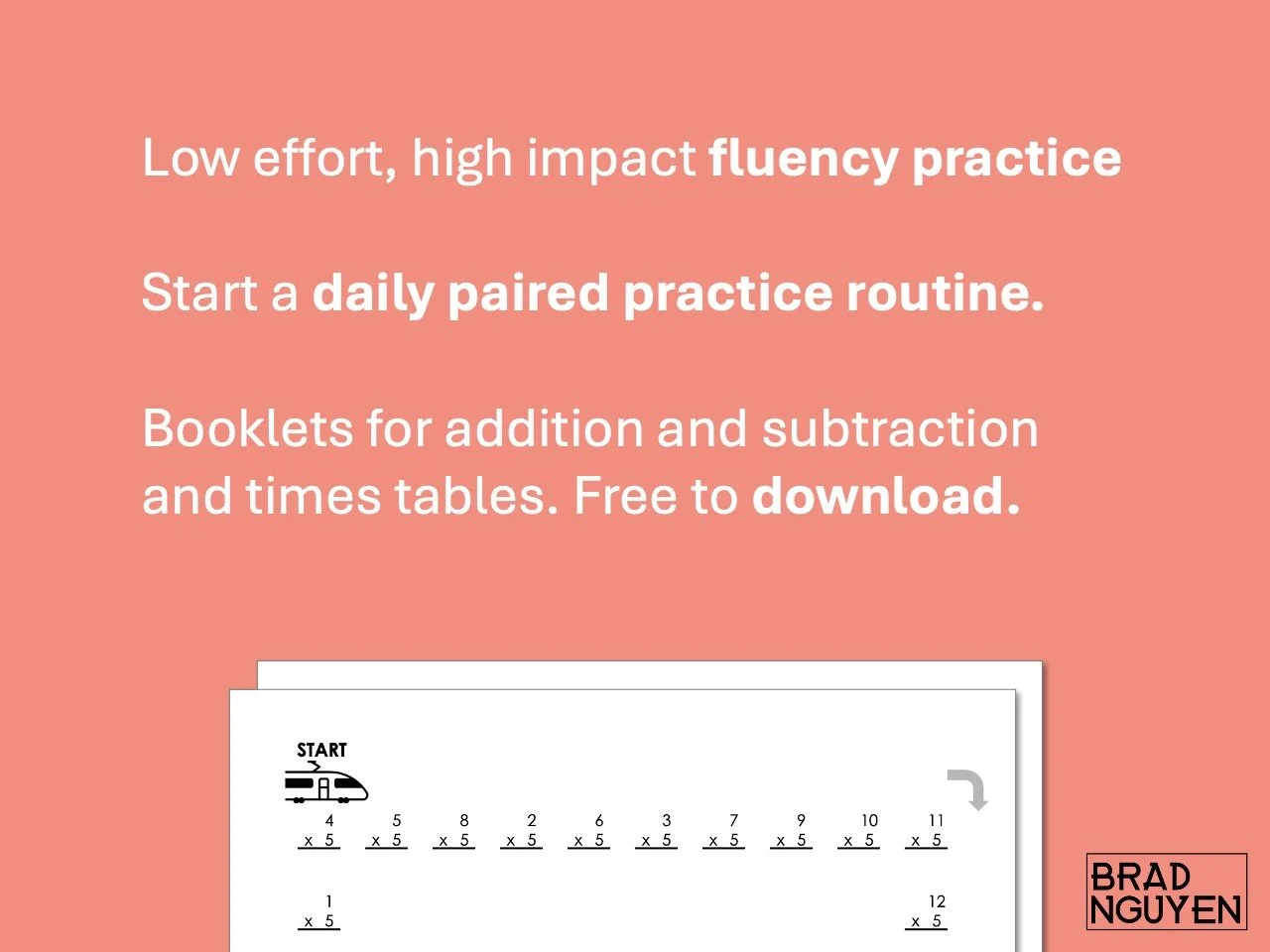
Schools and teachers find lots of different ways to get students to practise maths facts. They teach students dice games; use timed paper tests, put students on digital devices, chant facts together. If I were to choose one way to practice, though, it would be paired practice.
How does paired practice work?
Students work in pairs. Each has a worksheet with lots of problems. One partner is practising; the other can see the answers and is playing the role of coach. The student practising says the problem and answer (e.g. 4 plus 2 is 6, 3 plus 5 is 8), working through as many problems as possible.
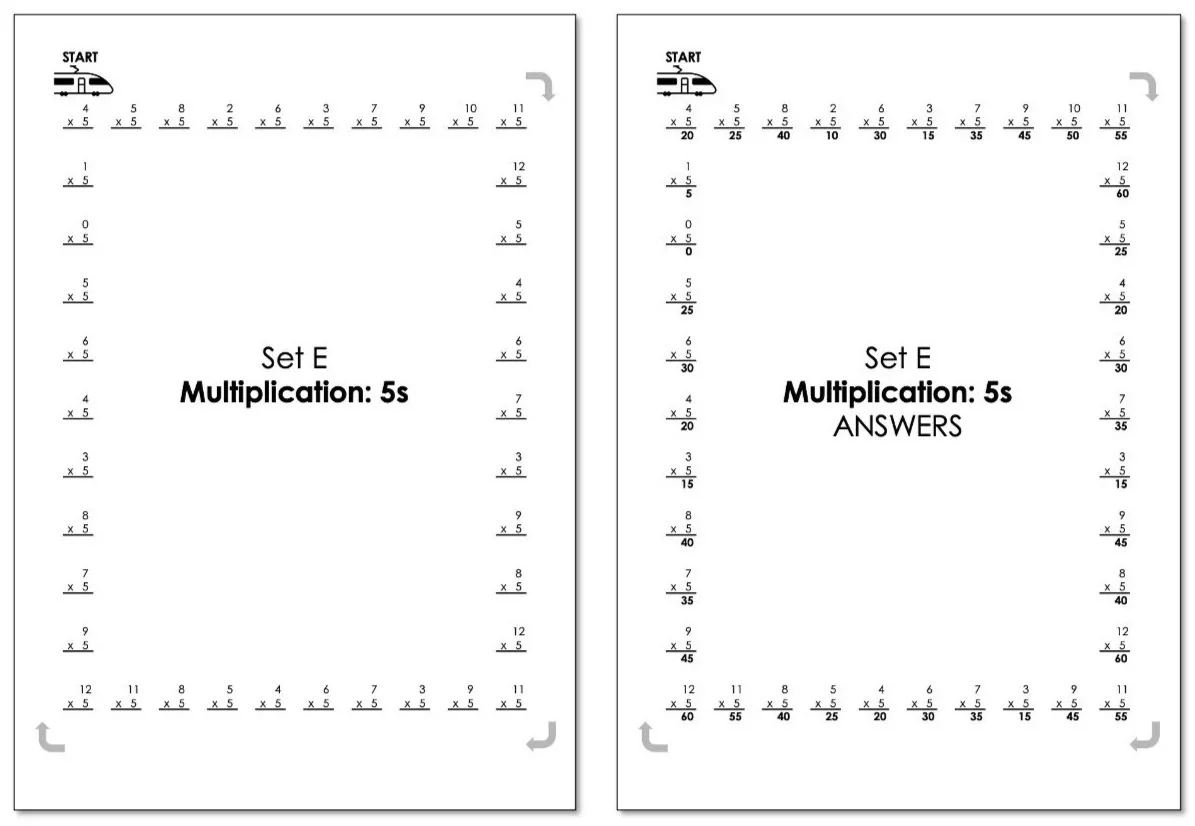
If the student practising makes a mistake or gets stuck, their partner simply gives them the answer. The student practising says the fact 3 times and goes backwards 3 problems, then keeps going. When they come back to the fact, they can now answer successfully and keep going.
After 2 minutes, students swap roles.*
Why does this practice format work so well?
High opportunities to respond - Paired practice is literally students answering as many questions as possible in a given amount of time.
Verbal response - Because it’s generally easier to say the answer than write the answer, this paired practice is more accessible.
Instant feedback and error correction - Students’ errors are not ignored, nor do they have to wait until the end of practice to find out if they made a mistake. Errors are identified straight away. Even better, the error correction procedure gives students opportunities to turn errors into success.
Leverages human interaction - The power of classrooms really lies in human interaction, whether it’s between the teacher and students or students interacting with each other. By working in pairs, each student feels accountable and supported.
Zero preparation - Once the booklets are printed out, that is all the prep that is needed. Because students aren’t writing on the booklets, they can be used day after day, year after year.
No devices - Devices are expensive and distracting. There are great digital apps out there, but non-digital practice formats are more sustainable for schools to use at scale.
Systematic content - Fluency practice is more effective when teachers can control the content that is being practised rather than leave it to chance. In the booklet for addition and subtraction, the sets are organised by strategies and starts with smaller numbers. In the booklet for multiplication and division, the sets are organised by tables and progress in a standard instructional sequence, starting with 10s, 2s and 5s.
Easy to differentiate - If every student in a class has a booklet, the teacher can simply tell certain students to practise a different set in the same booklet. They don’t have to spend time preparing different materials for different students.
How do I decide what set to use?
In another post, I proposed 3 important steps to help students memorise facts:
Strategy instruction - The goal is for students to learn a mental strategy that can be applied to a set of facts.
Strategy practice and retrieval practice - The goal is to develop accurate responding to the relevant set of facts.
Fluency practice - The goal is to develop fluent responding and long-term retention.
So if you have engaged students in strategy practice and retrieval practice, introducing facts bit-by-bit (see incremental rehearsal here and here), and students can respond accurately to a given set of problems, they are ready for fluency practice.
You might also notice that students who were previously fluent in a set of facts have seen their fluency drop over time (see diagnostic assessment here). This is a good time to return to fluency practice in that set and bring their fluency back up.
Download fluency booklets for addition and subtraction here.
*If you’re familiar with Rocket Math, you’ll recognise this practice format.
